
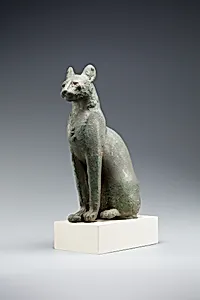
Cat with image of Bastet on breast
Unknown Artist
664–30 B.C.
Medium
Cupreous metal
Dimensions
L. 13.5 × W. 20.5 × H. 7.4 cm (5 5/16 × 8 1/16 × 2 15/16 in.)
Classification
Figurine, cat; 138-glass-case
Period
Late Period–Ptolemaic Period
Department
Egyptian Art
Museum
Metropolitan Museum of Art, New York, NY
Credit
Gift of Darius Ogden Mills, 1904
Accession Number
04.2.471
Rights
Public Domain
Tags
Art Historical Context
This enchanting bronze cat figurine, crafted by an unknown Egyptian artist between 664 and 30 B.C. during the Late Period to Ptolemaic era, captures the sacred allure of felines in ancient Egypt. 13.5 by 20.5 by 7.4 cm, the cupreous metal sculpture depicts a seated cat adorned with an image of Bast—the lioness-headed goddess of protection, fertility, and domestic joy—prominently displayed on its chest. Such votive figures were common offerings at temples, reflecting the deep reverence for cats as embodiments of divine power. Cats held immense cultural significance in Egypt, often mummified and dedicated to Bastet’s cult center at Bubastis, where millions of pilgrims gathered in raucous festivals. This artwork, a gift to the Metropolitan Museum of Art from Darius Ogden Mills in 1904, exemplifies Ptolemaic metalworking techniques, likely involving lost-wax casting to achieve the smooth, lifelike form and intricate detailing. Its survival highlights the enduring artistry of a civilization where the everyday cat symbolized household protection and the goddess’s watchful grace. Visitors, imagine stroking this glossy feline sentinel— a tangible link to rituals that blended piety with playfulness in the Nile Valley.