
Cattle Bell
Unknown Artist
19th century
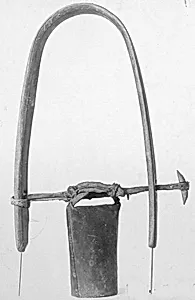
Medium
Metal
Dimensions
Height 21.0 cm, Diameter +/- 9.0 cm, Weight 1263 g (including yoke)
Classification
Idiophone-Struck-bell-clapper
Culture
Austrian
Department
Musical Instruments
Museum
Metropolitan Museum of Art, New York, NY
Credit
The Crosby Brown Collection of Musical Instruments, 1889
Accession Number
89.4.1708
Rights
Public Domain
Art Historical Context
Nestled in the Metropolitan Museum of Art's Crosby Brown Collection of Musical Instruments this 19th-century Austrian *Cattle Bell* exemplifies the humble yet vital tools of rural life. Crafted from metal, it stands 21 cm tall with a diameter of about 9 cm and weighs a substantial 1,263 grams—including its yoke—making it sturdy enough for daily use on alpine pastures. As an idiophone struck by an internal clapper, the bell produces a resonant clang when the animal moves, a simple yet effective acoustic signal. In 19th-century Austria, cattle bells were indispensable for herders in mountainous regions, allowing farmers to track livestock across vast, foggy meadows without sight. This functional design highlights the ingenuity of traditional metalworking, where form followed necessity: the bell's robust shape ensured durability against rough terrain, while its tone carried over distances, blending utility with a melodic countryside soundtrack. Though created by an unknown artisan, this bell offers a window into everyday cultural practices, preserving the sounds of pastoral heritage. Donated in 1889, it reminds us how ordinary objects can resonate with historical depth, inviting visitors to imagine the rhythmic chorus of a herd echoing through the Austrian Alps.