
Cedar Chest
c. 1936
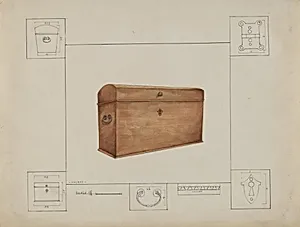
Medium
watercolor, colored pencil, and graphite on paper
Dimensions
overall: 22.9 x 30.5 cm (9 x 12 in.) Original IAD Object: 45"long; 28 1/2"high (?)
Classification
Index of American Design
Department
CG-W
Museum
National Gallery of Art, Washington, D.C.
Credit
Index of American Design
Accession Number
1943.8.4648
Rights
Public Domain
Art Historical Context
Welcome to the National Gallery of Art's exploration of American design! *Cedar Chest*, created around 1936 by artist Henry Meyers, is a meticulous rendering from the Index of American Design (IAD). This ambitious WPA Federal Art Project, launched during the Great Depression, employed artists to document everyday American objects, preserving the nation's folk art and craft heritage through detailed watercolor studies. Meyers captured the chest's form—originally about 45 inches long and 28½ inches high—highlighting its practical beauty in a compact 9 x 12-inch sheet. Crafted with watercolor, colored pencil, and graphite on paper, the work showcases layered techniques that bring out the wood's warm grain, subtle carvings, and functional elegance. Cedar chests were cherished heirlooms in American homes, valued for their moth-repelling wood and role in storing linens and valuables, embodying colonial and early American craftsmanship. This piece not only celebrates regional artistry but also reflects New Deal-era efforts to value "ordinary" design as cultural treasure, inviting us to appreciate the artistry in the everyday.
About the Artist
Henry Meyers · 1855–present
Henry Meyers was an American artist active during the 1930s and early 1940s, best known for his contributions to the Index of American Design, a monumental Works Progress Administration (WPA) project that sought to document the nation's rich heritage of folk art, crafts, and decorative objects. Operating under the Federal Art Project, Meyers produced precise, watercolor and graphite renderings of ...