
Censer
Unknown Artist
second half 18th century
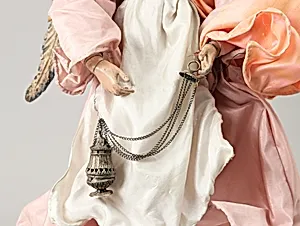
Medium
Silver gilt
Dimensions
H. 2 in. (5.1 cm.); H. (with chains) ca. 8 in. (20.3 cm.)
Classification
Crèche
Culture
Italian, Naples
Department
European Sculpture and Decorative Arts
Museum
Metropolitan Museum of Art, New York, NY
Credit
Gift of Loretta Hines Howard, 1964
Accession Number
64.164.140
Rights
Public Domain
Art Historical Context
Nestled in the Metropolitan Museum of Art's European Sculpture and Decorative Arts, this exquisite silver gilt censer hails from Naples, Italy, in the second half of the18th century. Standing just 2 inches tall (or about 8 inches with its chains), this delicate incense burner exemplifies the opulent craftsmanship of the Neapolitan Baroque tradition. Its gleaming silver, gilded with a thin layer of gold, would have caught the light during use, releasing fragrant incense smoke through intricate perforations—a sensory delight in both sight and smell. Classified within the museum's renowned crèche (presepe) ensemble, the censer served as an accessory in elaborate Neapolitan nativity scenes, which transformed the biblical Nativity into vibrant tableaux of everyday life. These crèches, a cherished Christmas custom in southern Italy, featured terracotta figures in sumptuous silk costumes amid architectural settings, blending piety with theatrical flair. Gifted to the Met in 1964 by Loretta Hines Howard, this piece highlights Naples' mastery of decorative arts, where silversmiths combined technical precision with Rococo elegance to elevate religious devotion. Though by an unknown artist, the censer's survival speaks to the enduring cultural reverence for these artifacts, inviting visitors to imagine its gentle sway amid flickering candles and holiday gatherings in 18th-century Italian homes and churches.