
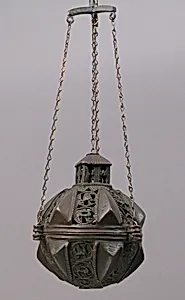
Censer with Animal and Scroll Motifs
Unknown Artist
13th century
Medium
Copper alloy
Dimensions
Overall (with chain): 12 1/2 x 4 5/8 in. (31.8 x 11.7 cm) Overall (without chain): 5 7/16 x 4 5/8 in. (13.8 x 11.7 cm)
Classification
Metalwork-Copper alloy
Culture
North Italian
Department
Medieval Art
Museum
Metropolitan Museum of Art, New York, NY
Credit
Rogers Fund, 1909
Accession Number
09.152.5
Rights
Public Domain
Tags
Art Historical Context
This exquisite 13th-century c, crafted from copper alloy by an unknown North Italian artist, served as a vessel for burning incense during medieval Christian liturgies. Standing about 5½ inches tall without its chain, it exemplifies the fine metalwork of the period, when such objects were essential in cathedrals and monasteries. The censer's design, with its chain for suspension, allowed priests to swing it during Masses, releasing aromatic clouds symbolizing prayers ascending to heaven—a sensory highlight of worship. Adorned with lively animal and scroll motifs, the surface likely features engraved or chased decoration typical of North Italian workshops transitioning from Romanesque to Gothic styles. Animals, a common medieval motif, might evoke biblical symbolism like strength or vigilance, while scrolling vines suggest abundance and eternal life, blending naturalistic observation with spiritual allegory. This craftsmanship highlights the era's skilled artisans, who balanced functionality with ornate beauty. Acquired through the Rogers Fund in 1909 and housed in The Metropolitan Museum of Art's Medieval Art department, this censer offers a tangible link to daily devotion in medieval Italy, where metalwork like copper alloy was prized for its durability and luster in sacred settings.