
Censer with cover
Unknown Artist
1800
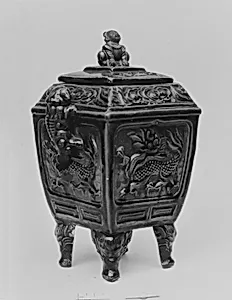
Medium
Faience with designs in relief (Raku ware)
Dimensions
H. 8 in. (20.3 cm); W. 5 5/16 in. (13.5 cm)
Classification
Ceramics
Culture & Period
Japan · Edo period (1615–1868)
Department
Asian Art
Museum
Metropolitan Museum of Art, New York, NY
Credit
Gift of Mrs. V. Everit Macy, 1923
Accession Number
23.225.262a, b
Rights
Public Domain
Tags
Art Historical Context
This elegant censer with cover, crafted in Japan during the Edo period (1615–1868) around 1800, exemplifies refined artistry of the time. Standing at 8 inches tall and 5⅜ inches wide, it served as an incense burner, essential for Buddhist rituals, tea ceremonies, and domestic altars. The Edo era, a golden age of peace and cultural flourishing, saw ceramics like this become symbols of everyday spirituality and aesthetic harmony. Made of faience with intricate relief designs—likely featuring animals, as suggested by its motifs—this piece draws from the revered Raku ware tradition. Raku, pioneered in the 16th century for the tea ceremony, involves hand-molding clay, low-temperature firing, and subtle glazes that yield a tactile, matte finish. The raised reliefs add depth and narrative charm, showcasing the potter's skill in capturing life's vitality without ostentation. A gift to the Metropolitan Museum of Art from Mrs. V. Everit Macy in 1923, this anonymous masterpiece invites visitors to appreciate Japan's blend of utility and beauty. Imagine the soft curl of incense smoke rising from its pierced lid, evoking centuries of quiet contemplation.