
Centennial Pedestal
Medium
Porcelain
Dimensions
H. 42 1/2 in. (108 cm); Diam. 16 3/8 in. (41.6 cm)
Classification
Pedestal
Culture
American
Department
The American Wing
Museum
Metropolitan Museum of Art, New York, NY
Credit
Purchase, Anonymous Gift, 1968
Accession Number
68.99.1a–d
Rights
Public Domain
Tags
Art Historical Context
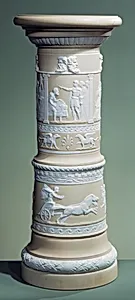
Crafted in 1876 by Karl L. H. Müller for the Union Porcelain Works, *Centennial Pedestal* stands as a monumental tribute to America's first centennial celebration of independence. This towering porcelain sculpture, reaching over 42 inches in height, was designed for display at the Philadelphia Centennial Exposition, where it showcased the burgeoning prowess of American ceramics manufacturers. Union Porcelain Works, based in New York, competed boldly with European giants like Sèvres and Meissen, proving that the U.S. could produce world-class porcelain on its own soil. The pedestal's intricate design features dynamic motifs of men, griffins, horses, and chariots, evoking classical mythology and triumphant processions. Molded in crisp white biscuit porcelain—a unglazed, matte finish prized for its sculptural purity—the work highlights Müller's mastery of modeling and firing techniques. Its substantial 16-inch diameter base provided stability for elaborate displays, blending utility with grandeur. Housed in The Metropolitan Museum of Art's American Wing, this piece symbolizes industrial innovation and national pride during the Gilded Age. Acquired through an anonymous gift in 1968, it reminds visitors of how American artisans transformed raw clay into symbols of cultural ambition, bridging art and industry in the post-Civil War era.