
Ceramic Fragment
Unknown Artist
15th century
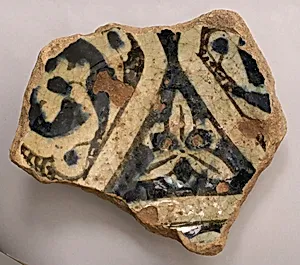
Medium
Stonepaste; painted with blue under transparent glaze
Classification
Ceramics
Department
Islamic Art
Museum
Metropolitan Museum of Art, New York, NY
Credit
Rogers Fund, 1913
Accession Number
13.190.51
Rights
Public Domain
Art Historical Context
This exquisite ceramic fragment from the 15th century offers a tantalizing glimpse into the refined world of Islamic art. Housed in the Metropolitan Museum of Art's Islamic Art Department (acquired through the Rogers Fund in 3), it exemplifies the sophisticated pottery traditions flourishing across the Islamic world during the late medieval period, particularly in regions like Persia and Syria. Crafted from stonepaste—a composite material of quartz, clay, and frit that mimicked the hardness and translucency of Chinese porcelain—this fragment showcases a hallmark technique: underglaze painting in vivid blue hues beneath a transparent glaze. This method, using cobalt for its intense color, ensured durability and brilliance, allowing intricate designs to shine through centuries. Such fragments often came from larger vessels like bowls or tiles, decorated with floral motifs or geometric patterns symbolizing paradise gardens in Islamic culture. Though incomplete, this piece highlights the artistic innovation of Islamic ceramists, who elevated everyday objects into symbols of luxury and piety. It invites us to imagine the bustling workshops where artisans pushed technical boundaries, bridging East and West in a shared language of beauty.