
Ceramic Fragment
Unknown Artist
13th–16th century
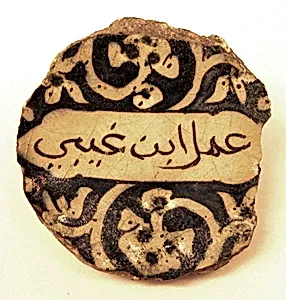
Medium
Stonepaste; painted under transparent glaze
Dimensions
H. 3/4 in. (1.9 cm) W. 3 in. (7.6 cm) D. 2 7/8 in. (7.3 cm) Wt. 1.8 oz. (51 g)
Classification
Ceramics
Department
Islamic Art
Museum
Metropolitan Museum of Art, New York, NY
Credit
Gift of Jack A. Josephson, 1973
Accession Number
1973.79.20
Rights
Public Domain
Art Historical Context
This delicate ceramic fragment, hailing from the Islamic world between the 13th and 16th centuries, offers a glimpse into the exquisite craftsmanship of medieval potters. Likely part of a larger vessel such as a bowl or dish, its small size—standing just 3/4 inch high and weighing a mere 1.8 ounces—belies its cultural depth. Produced during a golden age of Islamic art, spanning the Ilkhanid, Timurid, and early Safavid in regions like Iran or Central Asia, such pieces were everyday luxuries in palaces and homes, reflecting the era's blend of utility and beauty. Crafted from stonepaste (also known as fritware), a innovative composite of quartz, clay, and glass frit developed by Islamic artisans around the 10th century, the fragment features painting under a transparent glaze. This technique allowed for vibrant, durable colors that resisted wear, mimicking the sheen of Chinese porcelain while showcasing local ingenuity. The underglaze method protected designs from fading, enabling intricate motifs that often drew from nature, geometry, or calligraphy—hallmarks of Islamic aesthetic restraint and spirituality. Now housed in the Metropolitan Museum of Art's Department of Islamic Art, thanks to a 1973 gift from Jack A. Josephson, this fragment invites us to ponder the hands that shaped it centuries ago. Though incomplete, it embodies the technical mastery and artistic refinement that made Islamic ceramics a global influence.