
Ceramic Fragments
Unknown Artist
9th century
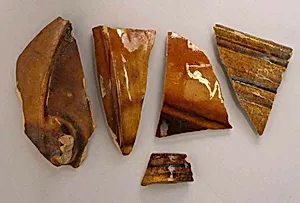
Medium
Earthenware; glazed
Dimensions
Ht. 3 7/16 in. (8.7 cm) W. 1 3/16 in. (3 cm) Th. 3/16 in. (0.4 cm)
Classification
Ceramics
Department
Islamic Art
Museum
Metropolitan Museum of Art, New York, NY
Credit
Rogers Fund, 1923
Accession Number
23.75.34a
Rights
Public Domain
Art Historical Context
These delicate ceramic fragments, dating to the 9th century offer a glimpse into the vibrant world of early Islamic pottery. Crafted from earthenware and coated with a glossy glaze, they likely once formed part of a larger vessel, such as a bowl or tile. Measuring just 3 7/16 inches high, 1 3/16 inches wide, and 3/16 inches thick, their petite scale belies their historical value, acquired through the Rogers Fund in 1923 the Metropolitan Museum of Art Islamic Art department. In the 9th century during the Abbasid Caliphate's Golden Age, glazed earthenware represented a pinnacle of technical innovation across the Islamic world, from Mesopotamia to Persia. Artisans mastered high-fire glazes that created durable, shimmering surfaces resistant to liquids—ideal for everyday tableware, mosque decorations, and trade goods along the Silk Road. This glazing technique, evolving from earlier Mesopotamian traditions, allowed for vibrant colors and intricate patterns, though these fragments preserve the essence of that craftsmanship. Though the artist remains unknown, these shards highlight ceramics' cultural importance in Islamic society, where pottery bridged utility and artistry amid restrictions on figural representation. They remind us of bustling workshops in Baghdad or Samarra, where such pieces fueled global exchange and artistic excellence. A testament to enduring ingenuity!