
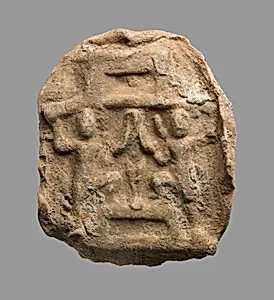
Ceramic imitation of bronze roller with two kilted figures
Unknown Artist
ca. 2100–1750 BCE
Medium
Ceramic
Dimensions
H. 8.8 cm x W. 7.5 cm x D. 1.4 cm
Classification
Ceramics-Reliefs
Period
Ur III–Isin-Larsa
Department
Ancient Near Eastern Art
Museum
Metropolitan Museum of Art, New York, NY
Credit
Anonymous Gift, 1998
Accession Number
1998.240
Rights
Public Domain
Tags
Art Historical Context
Step into the world of ancient Mesopotamia with this delicate *Ceramic imitation of bronze roller with two kilted figures crafted around 2100–1750 BCE during the Ur III to Isin-Larsa periods Measuring just 8.8 cm high, this small ceramic relief from the Metropolitan Museum of Art Ancient Near Eastern Art collection mimics the form of a bronze roller—likely used for stamping patterns or seals—showcasing two figures clad in traditional kilts. These fringed garments, common in Sumerian and early Babylonian art, evoke striding deities, attendants, or everyday men, rendered in shallow relief for a tactile, rolling impression. The choice of ceramic as a medium highlights resourceful artistry: while elite bronzes were prized for durability and shine, pottery offered an affordable way to replicate their prestige, making such objects accessible beyond royal workshops. Produced in southern Iraq's urban centers like Ur or Larsa, it reflects a time of city-state rivalries and temple economies, where seals authenticated documents or marked goods. This anonymous 1998 gift invites us to ponder daily life in one of humanity's earliest civilizations—did these kilted figures guard secrets, bless rituals, or simply roll out clay patterns? A humble yet evocative survivor, it bridges the gap between craft and culture in the cradle of writing and law.