
Ceremonial Arrowhead (<i>Yanone</i>)
dated 1645
Medium
Steel
Dimensions
L. 12 5/8 in. (32.1 cm); L. of head 5 3/4 in. (14.6 cm); W. 2 5/8 in. (6.7 cm); Wt. 6.7 oz. (189.9 g)
Classification
Archery Equipment-Arrowheads
Culture
Japanese
Department
Arms and Armor
Museum
Metropolitan Museum of Art, New York, NY
Credit
The Collection of Giovanni P. Morosini, presented by his daughter Giulia, 1932
Accession Number
32.75.321
Rights
Public Domain
Tags
Art Historical Context
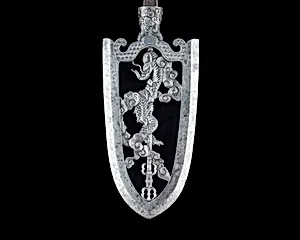
This exquisite *Ceremonial Arrowhead* (*Yanone*), crafted by the master Japanese metalworker Umetada Motoshige in 1645, exemplifies the pinnacle of Edo-period artistry in arms and armor. Measuring 12⅝ inches long with a broad 5¾-inch head, this steel piece weighs a substantial 6.7 ounces, far grander than functional battlefield arrows. Motoshige, from the renowned Umetada school famed for intricate sword fittings like *tsuba*, brought his expertise to archery equipment, transforming a utilitarian object into a work of sculptural beauty. In 17th-century Japan, during the peaceful Tokugawa shogunate, ceremonial weapons like *yanone* symbolized samurai status and were used in rituals, archery contests (*kyūdō*), or as diplomatic gifts rather than combat. The arrowhead's dragon motifs—evident in its tagged design—evoke imperial power and protection, a common motif in Japanese art drawing from mythology and Zen symbolism. Forged from high-quality steel, likely with piercing, chasing, or inlay techniques typical of the era, it showcases the precision and patience of traditional *mono-zukuri* craftsmanship. Today, at the Metropolitan Museum of Art (gift of the Morosini Collection, 1932), this *yanone* invites visitors to ponder the blend of lethality and lyricism in Japanese warrior culture, where even an arrowhead could be a poet's blade.