
Ceremonial Arrowhead (<i>Yanone</i>)
dated 1645
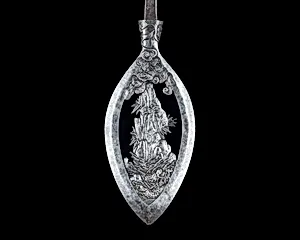
Medium
Steel
Dimensions
L. 12 1/8 in. (30.8 cm); L. of head 5 7/16 in. (13.8 cm); W. 2 1/2 in. (6.4 cm); Wt. 6.5 oz. (184.3 g)
Classification
Archery Equipment-Arrowheads
Culture
Japanese
Department
Arms and Armor
Museum
Metropolitan Museum of Art, New York, NY
Credit
The Collection of Giovanni P. Morosini, presented by his daughter Giulia, 1932
Accession Number
32.75.330
Rights
Public Domain
Tags
Art Historical Context
This exquisite ceremonial arrowhead, known as *yanone*, crafted by the master smith Umetada Motosh in 1645 during Japan's Edo period. Measuring over 12 inches long with a broad, leaf-shaped head, it exemplifies the pinnacle of Japanese metalworking in archery equipment. Made of high-quality steel, its robust form—complete with detailed dragon motifs—transforms a functional weapon into a work of art, blending utility with symbolic grandeur. In the peaceful Tokugawa era, when warfare gave way to refined samurai culture, artisans like Motoshige elevated arms and armor into decorative treasures. Dragons, fierce guardians in Japanese mythology, adorn the surface through intricate forging, chasing, and possibly gold inlay techniques, evoking imperial power and protection. These *yanone* were often used in ceremonial archery displays, such as *yabusame* (mounted archery), or as prestigious gifts among nobility. Housed in the Metropolitan Museum of Art's Arms and Armor Department, this piece from the Morosini Collection highlights the Umetada school's legacy in Kyoto, where innovation met tradition. Its weighty presence (6.5 ounces) underscores both balance for flight and the smith's mastery, inviting visitors to appreciate how Japanese craftsmen turned steel into storytelling icons.