
Ceremonial ewer
Unknown Artist
ca. 1520–50
Medium
Silver, gilt; embossed, chased and engraved
Dimensions
H. 17 7/8 × W. 11 1/2 in., Wt. 112.7oz. (45.4 × 29.2 cm, 3194g); Diam. of foot: 5 1/2 in. (14 cm)
Classification
Metalwork-Silver
Culture
Portuguese
Department
European Sculpture and Decorative Arts
Museum
Metropolitan Museum of Art, New York, NY
Credit
Purchase, Lila Acheson Wallace Gift, 2013
Accession Number
2013.950
Rights
Public Domain
Tags
Art Historical Context
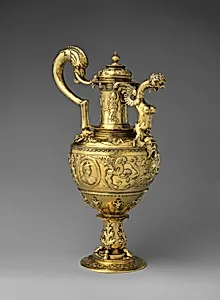
This magnificent ceremonial ewer, crafted in Portugal around 1520–50, exemplifies the opulence of Renaissance-era metalwork during the height of Portugal's maritime empire. Standing nearly 18 inches tall and weighing over 112 ounces, this silver vessel, adorned with gilding, was designed not for everyday use but for lavish rituals, such as handwashing at banquets or religious ceremonies among the elite. Its Portuguese origin reflects a period of global exploration and cultural exchange, where such luxury objects symbolized wealth and prestige. The ewer's surface bursts with intricate decoration, featuring mythical creatures—a hallmark of the era's fascination with fantasy and allegory. Artisans employed sophisticated techniques: embossing to raise dramatic motifs from the silver, chasing to refine details with fine hammering, and engraving for precise lines and textures. The gilt accents enhance the shimmering effect, transforming the piece into a sculptural jewel that catches the light like treasure from afar. Housed in The Metropolitan Museum of Art's European Sculpture and Decorative Arts Department, this ewer highlights Portugal's mastery of silversmithing, blending artistic virtuosity with cultural symbolism. Acquired through the Lila Acheson Wallace Gift in 2013, it invites visitors to ponder the hands that shaped it and the grand occasions it graced.