
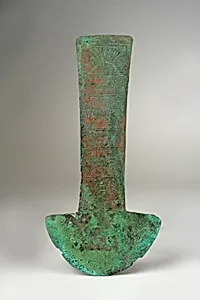
Ceremonial Knife
Unknown Artist
12th–15th century
Medium
Bronze
Dimensions
H. 4 1/8 x W. 8 7/16 in. (10.5 x 21.4 cm)
Classification
Metal-Implements
Culture
Chimú
Department
Arts of Africa, Oceania, and the Americas
Museum
Metropolitan Museum of Art, New York, NY
Credit
The Michael C. Rockefeller Memorial Collection, Bequest of Nelson A. Rockefeller, 1979
Accession Number
1979.206.944
Rights
Public Domain
Art Historical Context
This exquisite Ceremonial Knife hails from the Chimú culture, a sophisticated pre-Columbian civilization that thrived along Peru's northern coast from the 12th to 15th centuries. The Chimú were master builders of grand cities like Chan Chan and renowned for their advanced metallurgy, which produced objects blending utility with profound symbolism. Crafted during their peak before conquest by the Inca around 1470, this bronze implement reflects the society's hierarchical world, where elite artisans created items for rituals and elite ceremonies. Forged in bronze—a durable alloy of copper and tin—the knife measures a compact 4 1/8 x 8 7/16 inches, ideal for precise ritual use. Chimú metalworkers employed sophisticated lost-wax casting techniques, allowing intricate designs that often evoked mythical creatures or deities, underscoring the object's sacred purpose. Likely employed in offerings, sacrifices, or divination rites, it embodies the culture's deep spiritual connections to ancestors and the cosmos. Today, this artifact graces the Metropolitan Museum of Art's Arts of Africa, Oceania, and the Americas department, part of The Michael C. Rockefeller Memorial Collection. It offers a tangible glimpse into Chimú ingenuity, reminding us how everyday materials transformed into portals of cultural power.