
Ceremonial spoon
650–1000 CE
Medium
Wood
Dimensions
H. 6 × W. 1 5/8 × D. 1 in. (15.2 × 4.1 × 2.5 cm)
Classification
Wood-Implements
Culture
Wari
Department
Arts of Africa, Oceania, and the Americas
Museum
Metropolitan Museum of Art, New York, NY
Credit
The Michael C. Rockefeller Memorial Collection, Bequest of Nelson A. Rockefeller, 1979
Accession Number
1979.206.1214
Rights
Public Domain
Art Historical Context
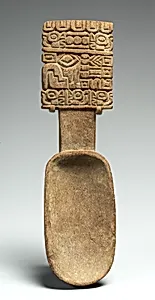
This delicate ceremonial spoon, crafted by Wari artist(s between 650 and 1000 CE, hails from the ancient Wari culture of Peru's Andean highlands. Flourishing during a time of imperial expansion, the Wari built vast networks of roads, cities, and trade routes, leaving behind a legacy of sophisticated artistry in ceramics, textiles, and wood. This small wooden implement—measuring just 6 inches high—exemplifies their skill in carving hardwood into functional yet ritualistic objects, likely used in sacred ceremonies involving offerings or communal rituals. Wood was a prized medium for the Wari, often sourced from sacred forests and intricately shaped to evoke spiritual power. Though modest in scale, the spoon's form reflects the culture's emphasis on precision and symbolism, blending everyday utility with elite ceremonial function. Such implements highlight the Wari's hierarchical society, where art served both practical and cosmological roles. Now part of The Michael C. Rockefeller Memorial Collection at The Metropolitan Museum of Art, this spoon invites us to ponder the hands that held it over a millennium ago—perhaps in moonlit rituals amid the Andes' towering peaks. A testament to Wari ingenuity, it bridges the ancient world to ours.