
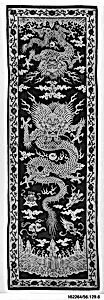
Chair Strip
Unknown Artist
early 18th century
Medium
Silk, metallic thread
Dimensions
72 3/4 x 23 in. (184.79 x 58.42 cm)
Classification
Textiles-Velvets
Culture & Period
China · Qing dynasty (1644–1911)
Department
Asian Art
Museum
Metropolitan Museum of Art, New York, NY
Credit
Rogers Fund, 1956
Accession Number
56.129.6
Rights
Public Domain
Tags
Art Historical Context
This exquisite *Chair Strip* from early 18th-century Qing dynasty China (1644–1911) is a stunning example of luxury textile artistry, designed as a decorative panel for high-status furniture like chairs or thrones. Measuring nearly six feet long and crafted from sumptuous silk velvet woven with shimmering metallic threads, it features intricate dragon motifs—a hallmark of imperial symbolism. Dragons in Chinese culture represented power, good fortune, and the emperor's divine authority, suggesting this piece adorned elite interiors, perhaps in a palace or noble household during the prosperous reign of the Kangxi or Yongzheng emperors. The medium's significance lies in its sophisticated weaving techniques, where silk provided a plush velvet pile for texture and depth, while metallic threads—likely gold or silver—caught the light to evoke otherworldly splendor. Such textiles were labor-intensive masterpieces, produced in imperial workshops, blending functionality with opulent display. This *Chair Strip* highlights the Qing era's peak in textile innovation, when China led global standards in silk production and ornamental design. Now in the Metropolitan Museum of Art's Asian Art Department (Rogers Fund, 1956), it offers visitors a tactile glimpse into China's refined material culture, where everyday objects became canvases for cosmic symbolism.