
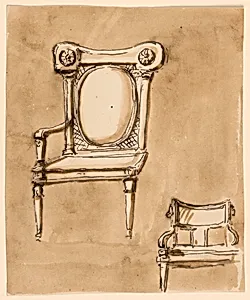
Chairs
ca. 1785–1790
Classification
furniture
Department
Smithsonian Collection
Museum
Smithsonian American Art Museum
Credit
Museum purchase through gift of various donors and from Eleanor G. Hewitt Fund
Accession Number
1938-88-2050
Rights
Public Domain
About this artwork
Research in Progress
Art Historical Context
Giuseppe Barberi, a Italian architect and designer (6–1809), these *Chairs* around 1785–1790, during the peak of Neoclassicism in Rome. Barberi was renowned for his elegant furniture designs that drew inspiration from ancient Roman and Greek motifs, blending symmetry, proportion, and refined ornamentation. Working in the late 18th century, contributed to the shift from opulent Baroque styles toward the cleaner, more intellectual aesthetic of Neoclassicism, which emphasized antiquity and rationality amid Europe's Enlightenment era. As functional art, these chairs exemplify Barberi's mastery of form and decoration, likely featuring carved details or inlays that evoked classical grandeur for elite interiors. Though the exact medium remains under study—research is ongoing—their presence in the Smithsonian American Art Museum's collection highlights the transatlantic appeal of Italian design, acquired through museum purchase and donor gifts. They offer a glimpse into 18th-century luxury living, where furniture was both practical and a statement of cultural sophistication. Visitors will appreciate how Barberi's work bridges architecture and everyday objects, inviting reflection on how neoclassical ideals shaped modern interiors. A true gem for furniture enthusiasts!