
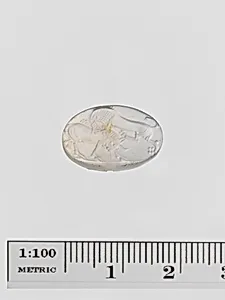
Chalcedony conoid seal
Unknown Artist
late 6th century BCE
Medium
Chalcedony
Dimensions
Length: 11/16 in. (1.7 cm)
Classification
Gems
Culture & Period
Greek · Archaic
Department
Greek and Roman Art
Museum
Metropolitan Museum of Art, New York, NY
Credit
Gift of John Taylor Johnston, 1881
Accession Number
81.6.1
Rights
Public Domain
Tags
Art Historical Context
This exquisite chalcedony conoid seal crafted in late 6th-century BCE Greece during the Archaic period offers a glimpse into the daily life and artistry of ancient Mediterranean cultures. Measuring just 11/16 inch (1.7 cm) in length, this tiny gem—classified among engraved stones or "gems"—was meticulously carved from chalcedony, a durable microcrystalline quartz prized for its translucency and hardness. Its conoid (cone-like) shape allowed it to be worn as a pendant or rolled to imprint designs, serving as a personal seal for authenticating documents, goods, or ownership on soft clay or wax. The seal's motifs, featuring powerful lions and bulls, reflect Archaic Greek fascination with heroic and natural symbols of strength and ferocity, influenced by Near Eastern traditions. These animals were common in seals, evoking myths of combat and dominion, much like scenes on contemporary vases or sculptures. The intaglio technique—incising the design into the stone for a raised impression—demonstrates remarkable precision with simple tools, highlighting the skill of anonymous Greek engravers who elevated functional objects into miniature masterpieces. Now housed in the Metropolitan Museum of Art's Greek and Roman Art Department, thanks to a gift from John Taylor Johnston in 1881, this seal bridges the personal and the monumental, reminding us how everyday artifacts preserved cultural identity in the ancient world.