
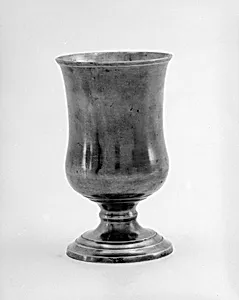
Chalice
ca. 1813–56
Medium
Pewter
Dimensions
H. 5 3/4 in. (14.6 cm)
Classification
Chalice
Culture
American
Department
The American Wing
Museum
Metropolitan Museum of Art, New York, NY
Credit
Gift of Mrs. Stephen S. FitzGerald, 1962
Accession Number
62.89.21
Rights
Public Domain
Art Historical Context
This elegant pewter chalice, by American artisan Israel Trask around 1813–56, exemplifies the fine metalwork of early 19th-century New England. Standing at just 5 3/4 inches tall, its modest scale belies its functional grace, likely designed for ecclesiastical use in Protestant churches where such vessels held sacramental wine. Trask, active during a transitional era in American craftsmanship, contributed to a tradition of pewter production that bridged colonial simplicity and emerging industrial influences. Pewter, an alloy of tin and other metals, was prized for its affordability and durability compared to silver, making it accessible for both households and congregations across the young United States. Objects like this chalice highlight the skilled handiwork of regional makers, often marked with their names to signify quality and provenance. Housed in The Metropolitan Museum of Art's American Wing, it reflects the cultural devotion and artisanal pride of antebellum America, where everyday ritual items became subtle expressions of faith and community. A gift to the Museum in 1962, this piece invites visitors to appreciate the understated beauty of functional art, connecting us to the lives of worshippers two centuries past.