
Chalice
Unknown Artist
ca. 1230–50
Medium
Silver, gilded silver, niello, and jewels
Dimensions
Overall: 8 x 6 7/8 in. (20.3 x 17.5 cm)
Classification
Metalwork-Silver
Culture
German
Department
The Cloisters
Museum
Metropolitan Museum of Art, New York, NY
Credit
The Cloisters Collection, 1947
Accession Number
47.101.26
Rights
Public Domain
Tags
Art Historical Context
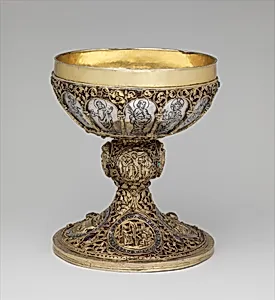
This exquisite chalice, crafted in Germany around 1230–50, exemplifies the opulent metalwork of the High Middle Ages. Fashioned from silver, gilded silver,ello (a technique creating striking black inlays), and encrusted with jewels, it measures a compact 8 x 6 7/8 inches, for the intimate rituals of monastic or ecclesiastical life. As a liturgical vessel used to hold the Eucharistic wine, it reflects the era's deep devotion to Christianity, where such objects were both functional and profoundly symbolic. The chalice's surface is adorned with vivid scenes from the life of Christ—including the Nativity, Annunciation, Baptism, Crucifixion—and figures of the Apostles—testifying to its role in evoking sacred narratives during Mass. These narrative reliefs, enhanced by gilding and niello contrasts, showcase the technical mastery of medieval goldsmiths, blending Byzantine influences with Gothic emerging styles for dramatic effect. Housed in The Cloisters Collection at the Metropolitan Museum of Art since 1947, this anonymous masterpiece offers a window into 13th-century German piety and craftsmanship, reminding us how art elevated everyday worship into something transcendent.