
Chandelier
Unknown Artist
ca. 1690
Medium
Wood, gilt gesso, yellow metal gilt lead
Dimensions
Overall: 50 × 44 in. (127 × 111.8 cm)
Classification
Woodwork-Furniture
Culture
British
Department
European Sculpture and Decorative Arts
Museum
Metropolitan Museum of Art, New York, NY
Credit
Gift of Irwin Untermyer, 1964
Accession Number
64.101.1031
Rights
Public Domain
Art Historical Context
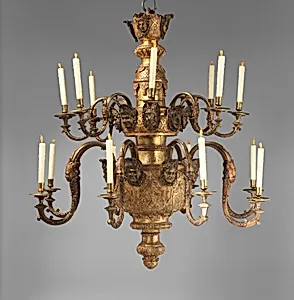
This elegant chandelier, crafted around 1690 by an unknown British artisan, exemplifies the opulence of late Stuart England during the William and Mary period. Standing at an impressive 50 × 44 inches, it would have illuminated the grand halls of a wealthy country estate or townhouse, serving as both a functional light source and a dazzling symbol of status. Chandeliers like this marked a shift from simpler iron designs to more elaborate wooden frameworks, reflecting the era's growing taste for lavish interior decoration amid post-Restoration prosperity. The piece showcases masterful techniques in woodwork, with a carved wooden structure enhanced by gilt gesso—a plaster-like ground molded for intricate details and then lavishly gilded—and yellow metal gilt lead elements for added luster and weight. This multi-layered gilding created a shimmering effect under candlelight, embodying Baroque exuberance tempered by the period's emerging neoclassical restraint. Classified as furniture within the Metropolitan Museum of Art's European Sculpture and Decorative Arts collection, it highlights Britain's skill in integrating sculpture and utility. A generous gift from Irwin Untermyer in 1964, this chandelier offers visitors a tangible glimpse into 17th-century domestic splendor, where every gleam whispered of refinement and power.