
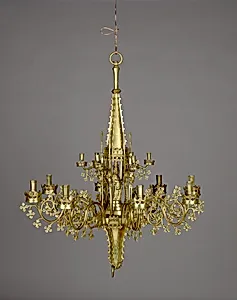
Chandelier with tabernacle (Kapellenkrone)
Unknown Artist
ca. 1450–70
Medium
Brass
Dimensions
H. 113.5 cm, L. of long branches 36.8 cm, L. of short branches 11.4 cm
Classification
Metalwork-Bronze
Culture
South Netherlandish, Dinant (?)
Department
Robert Lehman Collection
Museum
Metropolitan Museum of Art, New York, NY
Credit
Robert Lehman Collection, 1975
Accession Number
1975.1.1422
Rights
Public Domain
Art Historical Context
Nestled in the Robert Lehman Collection at the Metropolitan Museum of Art, the *Chandelier with tabernacleKapellenkrone)* a masterful example of South Netherlandishwork, dating to around 1450–70. Crafted from brass by an unknown artist—possibly from the renowned brassworking center of Dinant—this imposing fixture rises to 113.5 cm high, with long branches extending 368 cm and shorter ones 11.4 cm. Its design as a "chapel crown" reflects the opulent liturgical furnishings of late medieval churches, where such chandeliers suspended candles to evoke divine illumination amid Gothic interiors. The piece's tabernacle element hints at its sacred function, likely intended to house relics or devotional objects, merging practical lighting with spiritual symbolism. Brass, prized for its golden sheen and durability, was cast and hammered using sophisticated techniques honed in Dinant workshops, which dominated European metal production during the 15th century. This chandelier exemplifies the era's blend of technical virtuosity and religious fervor, illuminating both spaces and souls in prosperous Netherlandish communities. Today, it stands as a testament to the anonymous craftsmanship that defined medieval artistry, inviting visitors to ponder the flickering candlelight that once animated its branches during vespers and feasts.