
Charles I
published 1649
Medium
engraving
Dimensions
sheet: 15.7 × 17.4 cm (6 3/16 × 6 7/8 in.)
Classification
Department
CG-E
Museum
National Gallery of Art, Washington, D.C.
Credit
Rosenwald Collection
Accession Number
1951.11.430
Rights
Public Domain
Art Historical Context
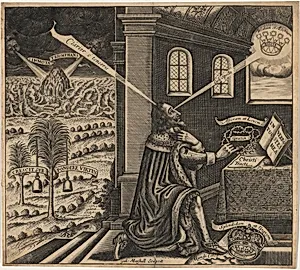
This engraving of Charles I by William Marshall, published in 1649, captures a pivotal moment in British history. Created in the very year the king was executed following the English Civil War, the print likely served as both a portrait and a commemorative image during a time of profound political upheaval. As an engraving, it belongs to a medium well-suited for wide distribution, allowing detailed likenesses to reach audiences beyond the royal court. William Marshall’s work reflects the technical precision of 17th-century printmaking, where fine lines and careful shading conveyed texture and depth on a modest scale. The sheet’s intimate dimensions—roughly the size of a small book page—suggest it was designed for personal study or inclusion in printed volumes, making royal imagery accessible to a broader public. Housed in the National Gallery of Art’s Rosenwald Collection, this print highlights the enduring value of engravings as historical documents. It offers today’s visitors a tangible connection to the turbulent transition from monarchy to commonwealth in England.
About the Artist
William Marshall · 1569–1677
**William Edgar Marshall (1837–1906)** was a preeminent American engraver and portrait painter, renowned for his meticulous line engravings on steel that captured the dignity and character of his subjects. Born in New York City to Scottish parents, Marshall began his career young, apprenticing at age seventeen in a watch-case factory before honing his skills engraving portraits at the U.S. Treasur...