
Charles Wilkes
Medium
Classification
Department
Smithsonian Collection
Museum
Smithsonian American Art Museum
Credit
National Portrait Gallery, Smithsonian Institution
Accession Number
NPG.80.119.u
Rights
Public Domain
Tags
Art Historical Context
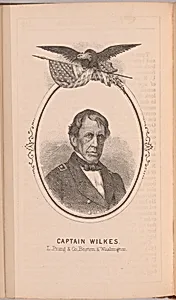
This lithographic portrait, titled *Charles Wilkes* and produced around 1862 by the Louis Prang Lithography Company captures the stern visage of Rear Admiral Charles, a pivotal figure in American naval history. Active from 1856 to 1899, Prang's firm pioneered high-quality color lithography, making fine art reproductions accessible to a wide audience during the Civil War era. Housed in the Smithsonian American Art Museum's National Portrait Gallery collection, this exemplifies 19th-century illustration techniques, likely featuring patriotic symbols like the eagle to evoke national pride. Charles Wilkes rose to fame as an explorer and hydrographer, leading the groundbreaking U.S. Exploring Expedition (1838–1842), which mapped vast Pacific regions and brought back treasures that seeded the Smithsonian Institution itself. By 1862, amid the Civil War, Wilkes gained notoriety for the Trent Affair, seizing Confederate diplomats from a British ship and nearly sparking war with Britain—earning him hero status in the North. This portrait, possibly from a book or periodical, immortalizes his legacy as a bold American icon. Lithography's precision allowed Prang to render Wilkes with dramatic detail, blending portraiture with illustrative flair. Such prints democratized heroism, fueling public support for the Union cause and preserving naval lore for generations. A testament to art's role in shaping national identity!