
Chartres
Medium
Salted paper print from paper negative
Dimensions
Sheet: 10 13/16 × 8 1/2 in. (27.4 × 21.6 cm) Image: 10 1/4 × 8 1/8 in. (26.1 × 20.6 cm)
Classification
Photographs
Department
Photographs
Museum
Metropolitan Museum of Art, New York, NY
Credit
Gilman Collection, Purchase, Ann Tenenbaum and Thomas H. Lee Gift, 2005
Accession Number
2005.100.37
Rights
Public Domain
Tags
Art Historical Context
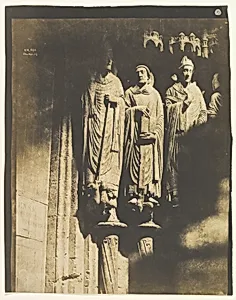
In the mid-19th century, as photography emerged as a revolutionary medium, French artist Pierre Emile Joseph Pécarrère captured the timeless grandeur of Chartres Cathedral in this salted paper print from a paper negative, created between 1850 and 1852. Titled simply *Chartres*, the image measures about 10¼ × 8⅛ inches and highlights the cathedral's intricate Gothic sculptures—those masterful stone figures that adorn its portals, evoking biblical scenes and saints. Produced at the Metropolitan Museum of Art through the Gilman Collection, this work exemplifies the calotype process, where a paper negative yields subtle tonal gradations and a soft, painterly quality unique to early photography. The salted paper technique, pioneered by William Henry Fox Talbot, was pivotal in the 1840s–50s, allowing photographers like Pécarrère to document architectural wonders with unprecedented detail and fidelity. Chartres, a UNESCO World Heritage site and pinnacle of medieval French Gothic design (begun in the 12th century), was a prime subject for such pioneers, preserving its weathered sculptures against time and decay. This print not only showcases Pécarrère's skill in harnessing soft daylight to reveal textures—from flowing drapery to expressive faces—but also bridges art history and technology, inviting us to appreciate how photography first immortalized humanity's sacred monuments.