
Chasse
Unknown Artist
13th century
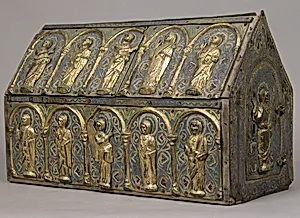
Medium
Champlevé enamel, gilt-copper
Dimensions
Overall: 9 13/16 x 16 1/2 x 8 in. (24.9 x 41.9 x 20.3 cm)
Classification
Enamels-Champlevé
Culture
French
Department
Medieval Art
Museum
Metropolitan Museum of Art, New York, NY
Credit
Gift of J. Pierpont Morgan, 1917
Accession Number
17.190.518
Rights
Public Domain
Art Historical Context
Step into the luminous world of 13th French medieval art with *Chasse*, a exquisite reliquary box crafted an unknown artist. Housed in the Metropolitan Museum of Art's Medieval Department (gift of J. Pierpont, 1917), this gilt-copper object measures about 10 x 16½ x 8 inches and exemplifies the devotional treasures of Gothic-era Christianity. A "chasse" refers to a shrine-like container designed to protect and display holy relics, often saints' bones or fragments, evoking a sense of sacred portability for processions and altars. The masterpiece shines through its champlevé enamel technique, a hallmark of Limoges workshops in medieval France. Artisans chiseled shallow cells into the copper base, filled them with colored glass powders, and fired the piece to fuse vibrant enamels—typically blues, reds, and whites—creating vivid scenes likely depicting biblical narratives or saintly lives. Gilding added a heavenly glow, making the chasse a beacon of faith amid the era's religious fervor. This artwork captures the cultural zenith of enameling in 13th-century Europe, blending technical innovation with spiritual devotion. Portable yet monumental in piety, it reminds us how medieval craftspeople transformed metal and vitreous color into portals to the divine, inviting pilgrims to marvel at eternity in miniature.