
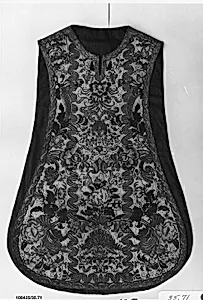
Chasuble
Unknown Artist
18th century
Medium
Silk and metal thread on silk
Classification
Textiles-Embroidered
Culture
Italian or French
Department
European Sculpture and Decorative Arts
Museum
Metropolitan Museum of Art, New York, NY
Credit
Rogers Fund, 1935
Accession Number
35.71
Rights
Public Domain
Tags
Art Historical Context
This exquisite chasuble, a sleeveless outer vestment worn by Catholic priests during Mass, hails from the 18th century and reflects the lavish craftsmanship of either Italian or French ateliers. Crafted from silk adorned with metal threads—likely gold or silver for a shimmering effect—this embroidered textile exemplifies the opulence of European religious art. Delicate floral motifs, as suggested by its design, bloom across the fabric, symbolizing divine beauty and the garden of paradise in Christian iconography. In the Baroque and Rococo eras, such vestments were not mere garments but masterpieces of the needle, demanding extraordinary skill in embroidery techniques. Artisans layered silk foundations with intricate metal-thread appliqués, creating a luminous texture that caught candlelight in dimly lit churches. Acquired through the Rogers Fund in 1935, this piece now graces the Metropolitan Museum of Art's European Sculpture and Decorative Arts collection, highlighting the fusion of piety and artistry. For visitors, the chasuble offers a tactile glimpse into 18th-century devotion, where every stitch honored the sacred. Its survival underscores the enduring allure of textiles as high art, bridging fashion, faith, and fine craftsmanship.