
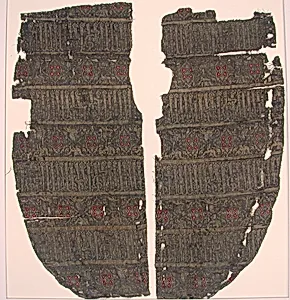
Chasuble Fragment
Unknown Artist
14th century
Medium
Silk, gilded metal wrapped silk thread; lampas
Dimensions
H. 41 in. (104.1 cm) W. 22 in. (55.9 cm)
Classification
Textiles-Woven
Department
Islamic Art
Museum
Metropolitan Museum of Art, New York, NY
Credit
Fletcher Fund, 1946
Accession Number
46.156.14
Rights
Public Domain
Art Historical Context
This exquisite *Chasuble Fragment* the 14th century a glimpse into the opulent world of Islamic textile artistry. Housed in the Metropolitan Museum of Art's Islamic Department, this woven silk piece measures an impressive 41 inches high by 22 inches wide. Crafted using the lampas technique—a sophisticated weaving method that interlaces ground and pattern wefts for intricate designs—it features gilded metal-wrapped silk threads shimmer with a luxurious golden sheen. Such materials were hallmarks of elite craftsmanship, reserved for high-status garments. Originating likely from a Mamluk or Persian workshop, the fragment once formed part of a chasuble, a poncho-like liturgical vestment prized in medieval Christian Europe. Islamic textiles like this were highly sought after through trade routes, symbolizing cultural exchange between the Islamic world and the West. The advanced lampas weave allowed for vibrant, complex motifs—though faded today—that showcased weavers' mastery of metallic effects without relying on embroidery. As a survivor from the Fletcher Fund acquisition of 1946, this artifact highlights the enduring allure of Islamic silks, blending technical innovation with spiritual symbolism. Visitors can marvel at how these threads wove together distant worlds in the Middle Ages.