
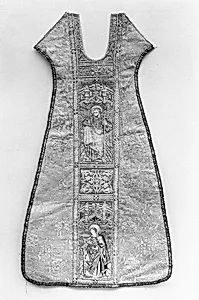
Chasuble front
Unknown Artist
16th century
Medium
Silk
Dimensions
48 1/4 x 26 1/4 in. (122.6 x 66.7cm)
Classification
Textiles-Embroidered
Culture
Spanish
Department
European Sculpture and Decorative Arts
Museum
Metropolitan Museum of Art, New York, NY
Credit
Frederick C. Hewitt Fund, 1914
Accession Number
14.134.4b
Rights
Public Domain
Tags
Art Historical Context
This exquisite 16th-century chuble front, crafted in Spain from luxurious silk, served as the ornate front panel of a priest's liturgical vestment worn Catholic Mass. Measuring 48¼ x 26¼ inches, it exemplifies the opulence of Spanish ecclesiastical textiles from the Renaissance era, when the Catholic Church commissioned richly embroidered garments to inspire devotion amid the Counter-Reformation fervor. Likely featuring imagery of the Virgin Mary—a central figure in Spanish piety—the piece reflects the era's deep Marian devotion, blending spiritual symbolism with masterful craftsmanship. Embroidered textiles like this were technical marvels, employing fine silk threads in intricate stitches such as couching, satin, and goldwork to create shimmering, jewel-like effects. Spanish workshops drew on influences from Islamic textile traditions via the Reconquista, merging them with Christian iconography for a uniquely vibrant style. The medium's durability and sheen made it ideal for ceremonial use, transforming the wearer into a living icon during rituals. Housed in The Metropolitan Museum of Art's European Sculpture and Decorative Arts department, this chasuble front highlights Spain's legacy as a textile powerhouse, where such vestments symbolized both faith and patronage. Visitors can appreciate how everyday silk evolved into sacred art, bridging history and spirituality in a single, tactile masterpiece.