
Chasuble (front)
Unknown Artist
late 17th or early 18th century
Medium
Silk; metal; linen
Dimensions
32 3/4 x 29 1/2 in. (83.2 x 74.9 cm)
Classification
Textiles-Ecclesiastical
Culture
Italian
Department
Robert Lehman Collection
Museum
Metropolitan Museum of Art, New York, NY
Credit
Robert Lehman Collection, 1975
Accession Number
1975.1.1805A
Rights
Public Domain
Tags
Art Historical Context
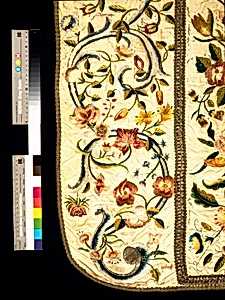
This exquisite chasuble front, crafted in Italy during the late 17 or early 18th, exemplifies the opulent ecclesiastical textiles produced during the Baroque era. Chasubles are sleeveless outer vestments worn by Catholic priests during Mass, symbolizing charity and serving as a canvas for spiritual splendor. Housed in the Metropolitan Museum of Art's Robert Lehman Collection, this (32 3/4 x 29 1/2 in.) reflects Italy's renowned silk industry and the Church's embrace of lavish artistry to inspire devotion amid the Counter-Reformation's visual fervor. Woven from luxurious silk and adorned with shimmering metal threads—likely gold or silver—over a linen backing, the chasuble showcases masterful embroidery techniques. Delicate floral motifs, as suggested by its tags, bloom across the surface, evoking paradise gardens and divine abundance, a common motif in religious vestments of the period. These intricate patterns, combining weaving and appliqué, demanded skilled artisans and costly materials, underscoring the era's fusion of craftsmanship and piety. As a rare survivor of liturgical finery, this chasuble offers a glimpse into the sensory richness of Baroque worship, where sight and touch elevated the sacred. Its preservation highlights the enduring cultural value of Italian textile traditions in ecclesiastical art.