
Checkerboard Tunic
16th century
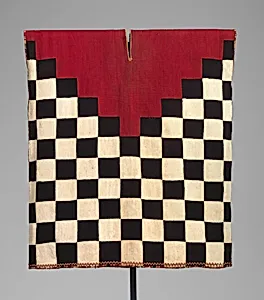
Medium
Camelid fiber
Dimensions
H. 34 1/4 x W. 30 1/8 in. (87 x 76.5 cm)
Classification
Textiles-Costumes
Culture
Inca
Department
Arts of Africa, Oceania, and the Americas
Museum
Metropolitan Museum of Art, New York, NY
Credit
Purchase, Fletcher Fund, Claudia Quentin Gift, and Harris Brisbane Dick Fund, 2017
Accession Number
2017.674
Rights
Public Domain
Art Historical Context
The *Checkerboard Tunic*, by Inca artist(s) in the16th century, exemplifies mastery of Andean textile arts during the height of the Inca Empire. Woven from fine camelid fiber—likely alpaca or vicuña wool—this garment measures 34¼ x 30⅛ inches and features a striking checkerboard pattern, a hallmark of Inca geometric designs. Such tunics (known as *uncus*) were not mere clothing but symbols of elite status, worn by nobility in ceremonies, diplomacy, or as tribute. Inca weavers employed sophisticated backstrap loom techniques, achieving remarkable precision and durability with natural dyes and symmetrical motifs. The 16th century marks a pivotal era, bridging the empire's expansion under rulers like Huayna Capac and the disruptive Spanish conquest around 1532. This tunic, now in the Metropolitan Museum of Art's Arts of Africa, Oceania, and the Americas department, reflects the cultural resilience and technical brilliance of Inca society, where textiles rivaled gold in prestige. Visitors will appreciate how this piece transports us to the Andes, where every thread encoded social hierarchy and imperial power—a testament to one of history's great weaving traditions.