
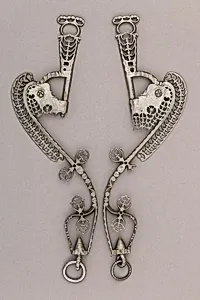
Cheekpieces of a Curb Bit
Unknown Artist
17th century
Medium
Iron alloy, tin
Dimensions
H. of each 13 in. (33 cm); W. of each 4 1/4 in. (10.8 cm); Wt. 1 lb. 7.8 oz. (674.7 g)
Classification
Equestrian Equipment-Bits
Culture
German, Munich
Department
Arms and Armor
Museum
Metropolitan Museum of Art, New York, NY
Credit
Gift of William H. Riggs, 1913
Accession Number
14.25.1812
Rights
Public Domain
Art Historical Context
Step into the world of 17th-century equestrian artistry with these striking *Cheekpieces of a Curb Bit*, crafted in Munich around the Baroque era. Forming the extended side arms of a curb bit—a key component of horse bridles—these pieces connected to the reins and curb chain to provide precise control over powerful warhorses or noble mounts. Measuring 13 inches high and weighing over a pound each, their robust iron alloy construction reflects the demands of cavalry and ceremonial riding in an age of military prowess and courtly splendor. Forged from iron alloy and enhanced with tin, likely for a silvery finish that resisted corrosion and added visual appeal, these cheekpieces showcase masterful metalworking techniques. Munich's armorers, renowned for their precision in the Arms and Armor tradition, transformed utilitarian equipment into objects of subtle elegance. The tinning process not only protected the iron but also evoked the opulence of gilded horse trappings favored by electors and knights. Today, gifted to the Metropolitan Museum of Art by William H. Riggs in 1913, these cheekpieces offer a tangible link to Renaissance-to-Baroque transitions in German craftsmanship. They remind us how equestrian gear blended function, form, and status, essential for the mounted elite navigating Europe's turbulent battlefields and grand parades.