
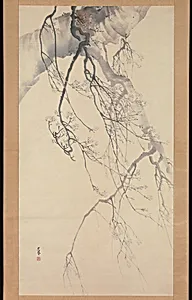
Cherry Blossoms
18th century
Medium
Hanging scroll; ink and color on paper
Dimensions
69 x 36 7/8 in. (175.2 x 93.6 cm)
Classification
Paintings
Culture & Period
Japan · Edo period (1615–1868)
Department
Asian Art
Museum
Metropolitan Museum of Art, New York, NY
Credit
The Harry G. C. Packard Collection of Asian Art, Gift of Harry G. C. Packard, and Purchase, Fletcher, Rogers, Harris Brisbane Dick, and Louis V. Bell Funds, Joseph Pulitzer Bequest, and The Annenberg Fund Inc. Gift, 1975
Accession Number
1975.268.77
Rights
Public Domain
Tags
Art Historical Context
Behold the delicate beauty of *Cherry Blossoms*, masterful hanging scroll by Matsumura Gosh (1752–1811), a leading figure in Japan's Edo period (1615–1868). Created in the 18th century, this ink and color on paper work measures an impressive 69 x 36 7/8 inches, designed to unfurl dramatically in a tokonoma alcove during tea gatherings or seasonal celebrations. Goshun, founder of the Shijō school, blended literati painting influences from China with native Japanese sensibilities, producing poetic scenes that evoke nature's fleeting grace. Cherry blossoms, or sakura, hold profound cultural significance in Japan, symbolizing the ephemeral nature of life—a core theme of mono no aware. Goshun's brushwork captures their soft pink petals and swaying branches with exquisite sensitivity, using layered ink washes for depth and subtle color for vibrancy. This technique highlights the scroll's role in everyday aesthetic appreciation, bridging elite connoisseurship and popular sentiment during the prosperous Edo era. Now part of the Metropolitan Museum of Art's Asian Art collection, thanks to the Harry G. C. Packard gift, *Cherry Blossoms* invites visitors to pause and reflect on beauty's transience, much like petals drifting in spring winds.
About the Artist
Matsumura Goshun · 1752–1811
Born in Kyoto, 1752, the eldest son of a prominent family. He studied calligraphy, music, and painting from an early age. His painting studies were under Ōnishi Suigetsu.