
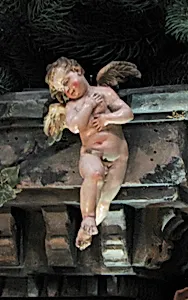
Cherub
Unknown Artist
second half 18th century
Medium
Polychromed terracotta
Dimensions
H. 6 1/4 in. (15.9 cm.)
Classification
Crèche
Culture
Italian, Naples
Department
European Sculpture and Decorative Arts
Museum
Metropolitan Museum of Art, New York, NY
Credit
Gift of Loretta Hines Howard, 1964
Accession Number
64.164.62
Rights
Public Domain
Tags
Art Historical Context
This delightful *Cherub*, crafted in polychromed terracotta during the second half of the 18th century, hails from Naples, Italy—a city renowned for its vibrant tradition of crèche figures. Standing just 6 1/4 inches tall, this small-scale sculpture captures the playful essence of a cherub, with its rounded form and expressive features brought to life through colorful paints applied over fired clay. Polychromy, the art of multi-colored painting on sculpture, was a hallmark technique in Neapolitan workshops, allowing artists to mimic lifelike skin tones, fabrics, and even glinting eyes, making these figures irresistibly animated. As part of the European crèche tradition, this cherub would have adorned elaborate Nativity scenes (*presepi*) displayed in churches, palaces, and homes during the Christmas season. Neapolitan crèches from this era blended Baroque exuberance with everyday realism, featuring angels, shepherds, and nobles in dynamic poses that celebrated the sacred amid the bustling life of 18th-century Italy. Produced by anonymous master craftsmen in family-run botteghe, such works underscored Naples' cultural devotion to the Neapolitan Baroque style, where joy and spirituality intertwined. Today, this charming piece graces the Metropolitan Museum of Art's Department of European Sculpture and Decorative Arts, a gift from Loretta Hines Howard in 1964. It invites visitors to appreciate the whimsy and piety of a bygone era's artistic devotion.