
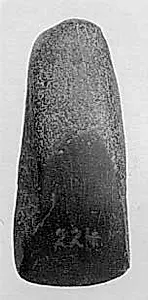
Chisel
Unknown Artist
Medium
Jadeite
Dimensions
H. 2 3/8 in. (6 cm); W. 1 1/16 in. (2.7 cm); Th. 11/16 in. (1.7 cm)
Classification
Jade
Culture
Guatemala
Department
Asian Art
Museum
Metropolitan Museum of Art, New York, NY
Credit
Gift of Heber R. Bishop, 1902
Accession Number
02.18.224
Rights
Public Domain
Art Historical Context
This petite jadeite chisel, measuring just over 2 inches tall, exemplifies the masterful craftsmanship of ancient Guatemalan cultures, likely from Pre-Columbianamerica. Carved from vibrant green jadeite—a rare, durable stone prized for its lustrous translucency and symbolic ties to water, fertility, and elite status—the tool's compact form (H. 2 3/8 in.; W. 1 1/16 in.; Th. 11/16 in.) it served both practical and ceremonial purposes. Artisans employed precise grinding and polishing techniques to shape the hard material, highlighting advanced lapidary skills honed over centuries. In Guatemalan societies, such as those of the Maya or earlier Olmec-influenced groups, jadeite objects transcended mere utility. Sourced from the Motagua River Valley, jade was a "green gold," reserved for nobility and ritual use, embodying life force and divine power. Chisels like this may have been used to carve wood, bone, or even other jades, underscoring the interconnected artistry of Mesoamerican tool-making. Acquired as part of Heber R. Bishop's renowned jade collection and gifted to the Metropolitan Museum of Art in 1902, this artifact now resides in the Asian Art Department, reflecting early 20th-century curatorial practices that grouped global jades together. A testament to enduring cultural reverence for this gemstone, it invites us to ponder the hands that wielded it millennia ago.