
Chisel
Unknown Artist
Medium
Nephrite
Dimensions
H. 3 1/2 in. (8.9 cm); W. 1/2 in. (1.2 cm); D. 1/2 in. (1.2 cm)
Classification
Jade
Culture
Russia
Department
Asian Art
Museum
Metropolitan Museum of Art, New York, NY
Credit
Gift of Heber R. Bishop, 1902
Accession Number
02.18.282
Rights
Public Domain
Art Historical Context
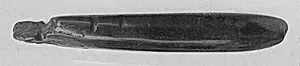
Nestled in the Metropolitan Museum of Art's Asian department, this petite nephrite chisel—measuring just 3½ inches long—offers a glimpse into ancient craftsmanship from Russian culture. Donated in 1902 by collector Heber R. Bishop it exemplifies the enduring appeal of jade artifacts in museum collections. Though its maker and exact date remain unknown, its form as a functional tool highlights the ingenuity of prehistoric or early historic societies. Crafted from nephrite, a variety of jade prized for its durability and fine polish, the chisel was ideal for carving wood, bone, or antler. Nephrite's hardness (ranking 6-6.5 on the Mohs scale) made it superior to softer stones, enabling precise work in resource-scarce environments. In Russian contexts, such tools likely originated from Siberian indigenous groups, where nephrite deposits in the Sayan Mountains fueled a vibrant jade-working tradition dating back millennia. This unassuming object bridges utility and artistry, reminding us how everyday tools embodied cultural values of resilience and skill. Visitors can appreciate its subtle luster, a testament to ancient hands shaping enduring legacy.