
Choir Stall
Unknown Artist
15th century
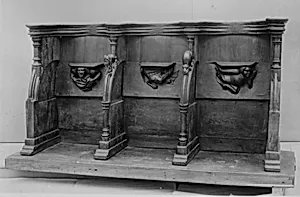
Medium
Oak
Dimensions
Overall: 42 x 81 3/8 x 24 3/4 in. (106.7 x 206.7 x 62.9 cm)
Classification
Woodwork-Furniture
Culture
French
Department
Medieval Art
Museum
Metropolitan Museum of Art, New York, NY
Credit
Gift of J. Pierpont Morgan, 1916
Accession Number
16.32.14
Rights
Public Domain
Art Historical Context
Step into the hushed world of a 15th-century French cathedral with this exquisite oak choir stall, a masterful example of medieval woodwork. Crafted during the late Gothic period, choir stalls like this one lined the choir areas of churches, providing tiered seating for clergy and singers during lengthy services. This piece, standing at over 6 feet wide and 3.5 feet tall, would have been part of a larger ensemble, blending utility with spiritual symbolism in grand ecclesiastical spaces. Carved from durable oak—a favored medium for its fine grain and resistance to wear— the stall showcases the anonymous artisan's skill in intricate relief work. French woodcarvers of the era excelled in misericords (undercroft ledges for discreet leaning during standing rituals) often adorned with foliage, mythical creatures, or moralistic scenes, though specific motifs here reflect the period's blend of piety and playfulness. Its survival speaks to the era's high craftsmanship, bridging the Middle Ages toward Renaissance refinement. A generous gift from J. Pierpont Morgan in 1916, this stall now graces the Metropolitan Museum of Art's Medieval Art collection, offering visitors a tangible link to the devotion and artistry of 15th-century France. Imagine the echoes of Gregorian chants filling the air as priests rested here— a quiet testament to faith's enduring beauty.