
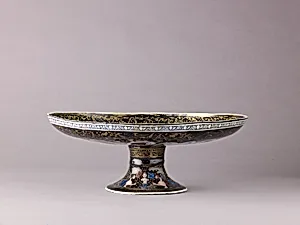
Christ and the Woman of Samaria
late 16th or early 17th century
Medium
Painted enamel on copper, partly gilt
Dimensions
H. 9.4 cm, diam. 24.8 cm
Classification
Enamels
Department
Robert Lehman Collection
Museum
Metropolitan Museum of Art, New York, NY
Credit
Robert Lehman Collection, 1975
Accession Number
1975.1.1235
Rights
Public Domain
Tags
Art Historical Context
In the late 16th or early 17th century French enamelist Suzanne de Court crafted *Christ and the Woman of Samaria a luminous painted enamel on copper, gilt, now housed in the Metropolitan Museum of Art's Robert Lehman Collection. This tondo (circular plaque), measuring just 9. cm high and 24.8 cm in diameter, depicts the biblical encounter from the Gospel of John (4:1–42), where Jesus speaks with a Samaritan woman at Jacob's well, symbolizing themes of redemption, faith, and breaking social barriers between Jews and Samaritans. De Court, one of the few documented female artists of her era from the renowned Limoges enamel workshops, exemplifies the technical mastery of painted enamels—a process where finely ground glass colors are applied in layers to a copper support and fired multiple times at high temperatures for a jewel-like translucency. The partial gilding enhances its opulence, catching light to mimic precious metals. Limoges enamels flourished during the Renaissance as affordable yet luxurious alternatives to panel paintings, popular for private devotion or princely collections. This work highlights women's vital, though often overlooked, roles in enamel production and religious art, blending Mannerist elegance with spiritual depth. Visitors will appreciate its vivid storytelling and enduring craftsmanship, a window into Counter-Reformation piety.