
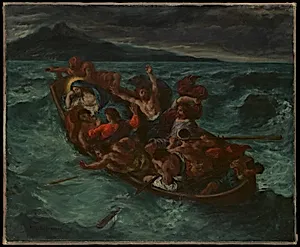
Christ Asleep during the Tempest
ca. 1853
Medium
Oil on canvas
Dimensions
20 x 24 in. (50.8 x 61 cm)
Classification
Paintings
Department
European Paintings
Museum
Metropolitan Museum of Art, New York, NY
Credit
H. O. Havemeyer Collection, Bequest of Mrs. H. O. Havemeyer, 1929
Accession Number
29.100.131
Rights
Public Domain
Tags
Art Historical Context
Eugène Delacroix, towering figure of French Romanticism, captures a pivotal biblical moment in *Christ Asleep during the* (ca. 1853). This oil-on-canvas painting depicts Jesus serenely sleeping in a boat amid a raging storm, as recounted in the Gospel of Mark (:35-41). The disciples, gripped by terror, awaken him just before he calms the waves—a scene blending human vulnerability with divine power. At 20 x 24 inches, this intimate work from the Metropolitan Museum of Art European Paintings collection showcases Delacroix's fascination with dramatic tension and the sublime forces of nature. Delacroix's Romantic style shines through in his bold use of color and loose, expressive brushwork, hallmarks of his rejection of neoclassical restraint in favor of raw emotion. Vivid contrasts of light and shadow heighten the chaos of the tempest against Christ's tranquil repose, drawing viewers into the disciples' panic. As a smaller-scale oil sketch-like piece, it exemplifies his innovative approach to composition, prioritizing movement and psychological intensity over precise detail. This painting not only reflects 19th-century Romantic ideals of nature's awe-inspiring might but also underscores themes of faith amid crisis, resonating across eras. Part of the H.O. Havemeyer Collection, it invites museum-goers to ponder the quiet strength amid turmoil.
About the Artist
Eugène Delacroix · 1798–1863
Eugène Delacroix (1798–1863) stands as the defining figure of French Romanticism and a pivotal bridge to modernism. Born in Charenton-Saint-Maurice near Paris, he came from distinguished lineage—his mother descended from the prestigious Oeben-Riesener furniture dynasty, while persistent speculation suggested the statesman Talleyrand may have been his biological father, a theory supported by physic...