
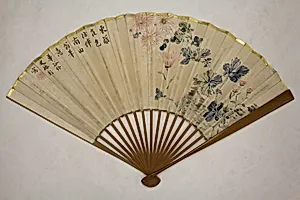
Chrysanthemums at the Eastern Fence
Medium
Folding fan; ink and color on paper
Dimensions
10 1/4 x 17 3/8 in. (26 x 44.1 cm)
Classification
Paintings
Culture & Period
Japan · Edo period (1615–1868)
Department
Asian Art
Museum
Metropolitan Museum of Art, New York, NY
Credit
The Harry G. C. Packard Collection of Asian Art, Gift of Harry G. C. Packard, and Purchase, Fletcher, Rogers, Harris Brisbane Dick, and Louis V. Bell Funds, Joseph Pulitzer Bequest, and The Annenberg Fund Inc. Gift, 1975
Accession Number
1975.268.122
Rights
Public Domain
Tags
Art Historical Context
Behold *Chrysanthemums at Eastern Fence*, a delicate folding fan painting by Tsubaki Kakoku Japan's Edo period (16151868). Crafted in ink and color on paper, artwork measures 10¼ × 17⅜ inches (26 × 44.1 cm) and captures the timeless beauty of chrysanthemums blooming against an eastern fence. Folding fans, or *sensu*, were everyday objects turned into portable art during the Edo era, often featuring nature motifs that reflected the period's appreciation for seasonal elegance amid urban prosperity. Chrysanthemums hold deep cultural resonance in Japan, symbolizing autumn, longevity, and imperial grace—evident in their recurring presence in poetry and painting. Kakoku's composition likely employs traditional ink wash techniques blended with subtle colors, evoking the refined *nanga* (Southern school) style influenced by Chinese literati traditions, though adapted to Japanese tastes. The "Eastern Fence" evokes poetic imagery, perhaps nodding to classical Chinese verses cherished in Edo literati circles. Housed in the Metropolitan Museum of Art's Asian Art Department as part of the renowned Harry G. C. Packard Collection (1975), this fan invites visitors to ponder how intimate objects like these bridged art and daily life, offering a window into Edo Japan's harmonious blend of nature and refinement.