
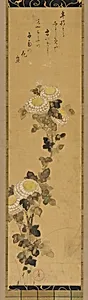
Chrysanthemums
18th-19th century
Classification
Painting
Department
Smithsonian Collection
Museum
Smithsonian American Art Museum
Credit
Gift of Charles Lang Freer
Accession Number
F1909.155
Rights
Public Domain
Tags
About this artwork
To 1909
Art Historical Context
**Chrysanthemums** by Ogata Kenzan (1663–1743) is a captivating example of Edo-period (1615–1868) Japanese art, likely a *kakemono*—a traditional hanging scroll painting designed to be unrolled for display during special occasions. Kenzan, a master potter and painter, was renowned for his elegant depictions of nature, blending poetic simplicity with refined brushwork. Though the exact medium is unknown, such works often feature ink and light colors on silk or paper, evoking the seasonal beauty of chrysanthemums, Japan's imperial flower symbolizing longevity, rejuvenation, and autumn's fleeting grace. This painting reflects the cultural flourishing of the Edo era, a time of peace when literati artists like Kenzan drew inspiration from nature's impermanence, influenced by Zen aesthetics and the Rinpa school's decorative style. Chrysanthemums held deep significance in Japanese poetry and festivals, representing resilience amid change. A prized piece from the Charles Lang Freer collection—gifted to the Smithsonian American Art Museum—this artwork entered Western collections by 1909, bridging Eastern traditions with global appreciation. Visitors will delight in its timeless elegance, a window into Japan's artistic soul.