
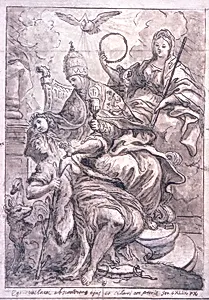
Church Triumphant over Falsehood
Medium
figures
Classification
figures
Department
Smithsonian Collection
Museum
Smithsonian American Art Museum
Credit
Museum purchase through gift of various donors and from Eleanor G. Hewitt Fund
Accession Number
1938-88-6437
Rights
Public Domain
About this artwork
Research in Progress
Art Historical Context
Paolo de Matteis (2–1728), a prominent Italian Baroque artist from Naples, created *Church Triumphant over False* around 1700. Known for his dynamic compositions blending classical influences with dramatic religious themes, de Matteis drew from the Carracci school's naturalism and Caravaggio's tenebrism. This work classified as "figures" in the Smithsonian American Art's collection, likely represents sculptural models or bozzetti—preparatory clay or plaster studies common in Baroque workshops for larger commissions. The allegorical title evokes the Counter-Reformation era's fervor, where the Catholic Church asserted victory over heresy and deception. De Matteis's figures would embody this triumph through expressive poses and symbolic contrasts, reflecting the period's emphasis on emotional intensity and spiritual drama. Acquired through museum purchase with donor gifts, including the Eleanor G. Hewitt Fund, it highlights cross-cultural exchanges in early American collections. Though research continues, this piece offers a window into 18th-century Italian artistry, bridging painting and sculpture in the Baroque tradition. Visitors can appreciate its role in visualizing faith's resilience amid intellectual upheavals.