
Ciborium
Unknown Artist
16th century
Medium
Silver-gilt
Dimensions
Overall: 13 5/16 x 8 1/4 x 6 7/16 in. (33.8 x 21 x 16.3 cm)
Classification
Metalwork-Silver
Culture
Spanish
Department
Medieval Art
Museum
Metropolitan Museum of Art, New York, NY
Credit
Gift of J. Pierpont Morgan, 1917
Accession Number
17.190.373
Rights
Public Domain
Tags
Art Historical Context
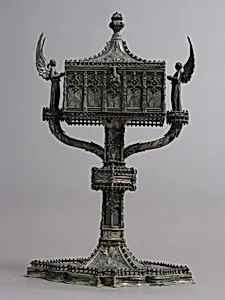
Nestled in the Metropolitan Museum of Art's Medieval collection, this exquisite 16th-century Spanish *Ciborium* is a masterful example of silver-gilt metal. Crafted as a lidded vessel to hold the consecrated Eucharist during Catholic Mass, it stands at 13 5/16 inches tall its gleaming surfaces adorned with angelic figures that evoke heavenly reverence. The unknown artisan's skill shines through the luxurious silver-gilt technique—silver coated with a thin layer of gold via fire-gilding—creating a radiant, durable finish fit for sacred rituals. Dating to Spain's Renaissance era, amid the Catholic Church's enduring influence post-Reconquista, this ciborium reflects the era's opulent liturgical art. Such objects were commissioned by wealthy patrons or churches, symbolizing devotion and divine splendor. The intricate chasing and engraving, hallmarks of Spanish metalwork, highlight technical prowess: delicate repoussé angels likely frame biblical scenes, blending Gothic traditions with emerging Renaissance naturalism. A generous gift from J. Pierpont Morgan in 1917, this piece invites visitors to ponder the fusion of faith, craftsmanship, and cultural prestige in 16th-century Iberia— a tangible link to the spiritual heart of Spanish history.