
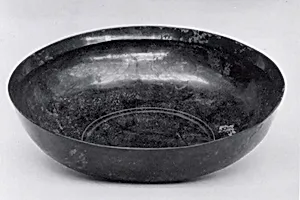
Circular bowl
Unknown Artist
ca. 3rd–7th century CE
Medium
Bronze (speculum)
Dimensions
1 3/4 × 7 5/16 × 7 5/16 in. (4.4 × 18.6 × 18.6 cm)
Classification
Metalwork-Vessels
Culture & Period
Sasanian · Sasanian
Department
Ancient Near Eastern Art
Museum
Metropolitan Museum of Art, New York, NY
Credit
Rogers Fund, 1958
Accession Number
58.101
Rights
Public Domain
Art Historical Context
This elegant circular bowl, crafted by an unknown Sasanian artisan around the 3rd to 7th century CE, exemplifies the refined metalworking traditions of the Sasanian, which spanned modern-day Iran and beyond. Flourishing from 224 to 651 CE, the Sasanians were masters of luxury goods, blending Persian heritage with influences from neighboring cultures like Rome and India. Such vessels were likely used in elite banquets or rituals, symbolizing wealth and status in a society where opulent feasting underscored royal power. Made of speculum bronze—a high-tin alloy prized for its silvery, mirror-like polish when buffed—this shallow bowl measures just 1¾ inches high and 7⅜ inches in diameter, making it perfectly suited for serving delicacies or offerings. The choice of speculum metal highlights Sasanian technical prowess; its durability and luster allowed for intricate chasing or engraving (though specifics here are unadorned in surviving form), techniques that elevated everyday objects to art. Acquired through the Rogers Fund in 1958, it now graces the Metropolitan Museum of Art's Ancient Near Eastern collection, offering a tangible link to an empire whose artistry influenced Islamic and medieval European crafts.