
Circular Box (Pyxis) with the Women at Jesus' Tomb
Unknown Artist
500s
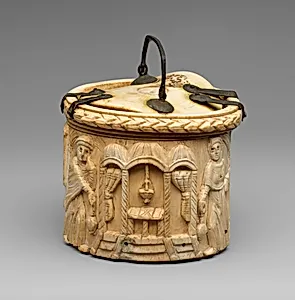
Medium
Elephant ivory with metalwork and paint
Dimensions
Overall (with lid): 4 1/4 x 5 x 4 3/4 in. (10.8 x 12.7 x 12.1 cm) Overall (Without lid): 4 1/4 x 5 x 4 3/8 in. (10.8 x 12.7 x 11.1 cm) Top ((Lid)): 1 x 5 x 4 3/4 in. (2.5 x 12.7 x 12.1 cm)
Classification
Ivories-Elephant
Culture
Byzantine
Department
Medieval Art
Museum
Metropolitan Museum of Art, New York, NY
Credit
Gift of J. Pierpont Morgan, 1917
Accession Number
17.190.57a, b
Rights
Public Domain
Tags
Art Historical Context
This exquisite Byzantine pyxis, or circular box, from the 6th century, captures a pivotal moment from the New Testament: the Women at' Tomb. Crafted an unknown artist, it depicts the holy women discovering the empty tomb on Easter morning, a scene symbolizing resurrection and hope in early Christian devotion. Such small, portable ivories were prized luxury items, often used to hold cosmetics, spices, or relics, reflecting the refined tastes of Byzantine elites during the reign of Emperor Justinian I, when the empire flourished as a cultural crossroads of East and West. Fashioned from elephant ivory—a rare, imported material evoking imperial prestige—the box features intricate metalwork inlays and traces of paint that once enlivened its carved figures. Byzantine ivories like this exemplify the era's artistic mastery: flat, stylized forms with expressive gestures, emphasizing spiritual narrative over realism. At just over 4 inches tall, its compact design allowed for intimate, personal piety, making it a tangible link to the vibrant Christian art of Constantinople. A gift to the Metropolitan Museum of Art from J. Pierpont Morgan in 1917, this pyxis highlights the enduring allure of Byzantine craftsmanship, blending technical virtuosity with profound theological meaning. Visitors, imagine carrying a miracle in your hand!