
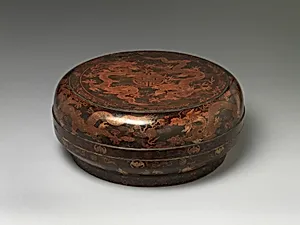
Circular Food Box with Dragons and the Character Shou (Longevity)
Unknown Artist
18th–19th century
Medium
Black and red lacquer painted with gold, lacquer, and oil colors
Dimensions
H. 8 1/2 in.(21.6 cm); Diam. 22 5/8 in.(57.5 cm)
Classification
Lacquer
Culture & Period
China · Qing dynasty (1644–1911)
Department
Asian Art
Museum
Metropolitan Museum of Art, New York, NY
Credit
Gift of Florence and Herbert Irving, 2015
Accession Number
2015.500.1.64a, b
Rights
Public Domain
Tags
Art Historical Context
This exquisite circular food box from China's Qing dynasty (16441911), dating to the 18th–19th century, exemplifies the's masterful lacquerware tradition. Measuring 8½ inches high and nearly 23 inches in diameter, its broad, lidded form was designed for storing delicacies, blending everyday utility with opulent decoration. The surface features dynamic dragons—imperial symbols of power,, and good fortune—intertwined with the bold character *shou* (longevity), a auspicious motif invoking eternal life and prosperity, perfect for festive or elite households. Crafted in black and red lacquer painted with gold, additional lacquer layers, and oil colors, the box showcases *qi-lacquer* techniques refined over centuries. Artisans applied multiple thin coats of tree sap resin, polished to a glossy sheen, then meticulously painted and inlaid designs that shimmer under light. This labor-intensive process, peaking in the Qing period, elevated lacquer from functional ware to high art, rivaling porcelain and jade in imperial courts. Today, this gift to the Metropolitan Museum of Art from Florence and Herbert Irving invites us to appreciate Qing China's cultural reverence for harmony between beauty and symbolism, where even a food box whispered wishes for longevity and imperial favor.