
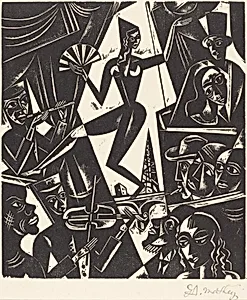
Cirque de Paris
Medium
woodcut
Classification
Department
CG-W
Museum
National Gallery of Art, Washington, D.C.
Credit
Ailsa Mellon Bruce Fund
Accession Number
1974.82.1
Rights
Public Domain
Art Historical Context
**Cirque de Paris**Georg Alexander Mathey,1922 Woodcut on paper Step into the dazzling world of 1920s Paris with Georg Alexander Mathey's *que de Paris*, a 1922 woodcut print housed in the National Gallery Art, acquired through the Ailsa Mellon Bruce Fund Created in the exuberant post-World War I era, this artwork captures the thrill of the Parisian circus—a beloved spectacle of acrobats, clowns, and performers that symbolized escapism and joie de vivre amid Europe's recovery. Mathey, a lesser-known but skilled printmaker, evokes the electric atmosphere of the Cirque d'Hiver or similar venues, where audiences sought glamour and wonder. The woodcut medium shines here, a labor-intensive relief printing technique where the artist carves designs into wood blocks, inking the raised surfaces to produce bold, graphic lines and stark contrasts. Popular among early 20th-century artists for its tactile power and affordability as a print, it allowed works like this to reach wider audiences beyond elite collectors. Mathey's choice amplifies the circus's dynamic energy, with sharp forms suggesting movement and light play under the big top. As a classified print in the museum's CG-W department, *Cirque de Paris* offers a window into interwar cultural life, blending artistry with everyday entertainment. Visitors will appreciate its crisp execution and nostalgic charm, a testament to printmaking's enduring appeal.