
Claude Joly
1673
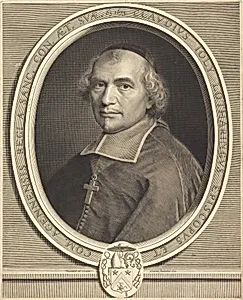
Medium
engraving
Classification
Department
CG-E
Museum
National Gallery of Art, Washington, D.C.
Credit
Rosenwald Collection
Accession Number
1943.3.6489
Rights
Public Domain
Art Historical Context
Created in 1673 by the celebrated French engraver Robert Nanteuil, this print portrays Claude Joly, a figure of note in seventeenth-century France. Nanteuil was renowned for his refined portrait engravings, which captured the likenesses of, scholars, and members the royal court with remarkable precision and dignity. Working during the reign of Louis XIV, he helped elevate engraving from a reproductive craft to a respected art form. The choice of medium is significant: engraving allowed images to be printed and distributed widely, sharing portraits beyond the elite circles that commissioned them. Nanteuil’s technique—characterized by delicate line work and subtle tonal gradations—gave his prints both clarity and a sense of lifelike presence on the page. Today, this impression resides in the National Gallery of Art’s Rosenwald Collection, a renowned holding of works on paper that preserves such historical prints for study and enjoyment. Visitors can appreciate not only the sitter’s composed expression but also the enduring power of printmaking to connect us with figures from centuries past.
About the Artist
Robert Nanteuil · 1623–1678
Robert Nanteuil (1623-1678) was a French portrait engraver, draughtsman, and pastellist who became the preeminent portraitist to the court of Louis XIV. His technical mastery and royal patronage fundamentally transformed the status of engraving in France, elevating it from a mechanical craft to a recognized fine art. Nanteuil stands as the outstanding French portrait engraver of the seventeenth c...