
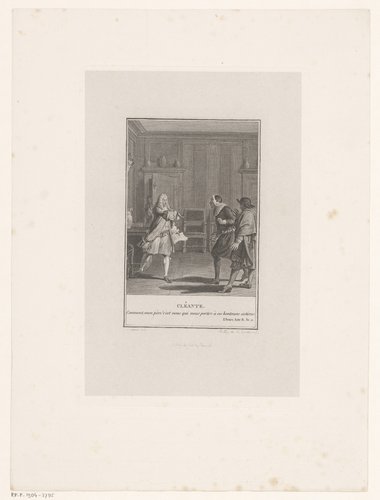
Cléante.
1811 - 1813
Medium
etching
Dimensions
146; 218
Rights
Public Domain
About this artwork
Schenking van J.F.R. van de Wall, Den Haag
Art Historical Context
"Cléante" is a delicate etching created by Remi Henry Josephvaux between 1811 1813. Measuring just 218 mm high by 146 mm wide, this intimate print captures the artist's skill in a period of political upheaval across Europe, including the Napoleonic era's influence on the Netherlands and Belgium. Delvaux, a lesser-known engraver of his time, likely drew inspiration from classical literature or theater—Cléante evokes the rational, noble character from Molière's 17th-century play *Le Misanthrope*, a nod to Enlightenment ideals amid early Romantic stirrings. Etching, Delvaux's chosen medium, involves coating a metal plate with acid-resistant ground, scratching designs into it, and submerging it in acid to etch fine lines. This technique allowed for intricate detail and tonal subtlety in small-scale works like this one, making high-quality reproductions accessible beyond paintings. Produced during a time when printmaking flourished for disseminating images of portraits, scenes, and literary figures, "Cléante" exemplifies the era's blend of technical precision and cultural reference. This piece entered the collection as a generous gift (*schenking*) from J.F.R. van de Wall of The Hague, highlighting Dutch patronage of graphic arts in the 19th century. Visitors will appreciate its modest scale and the window it offers into early 1800s artistic practices, inviting closer inspection of its etched lines and historical echoes.